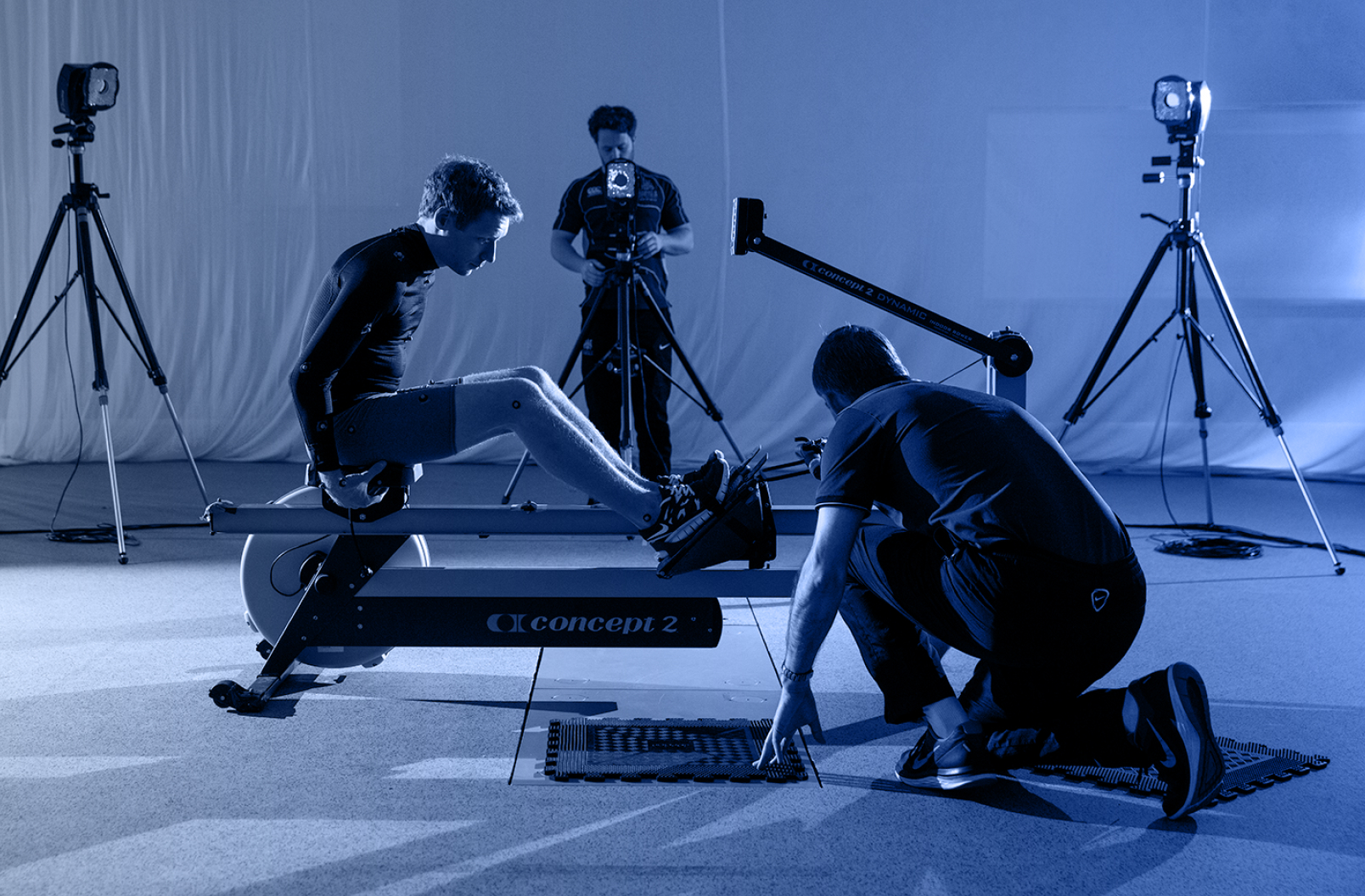
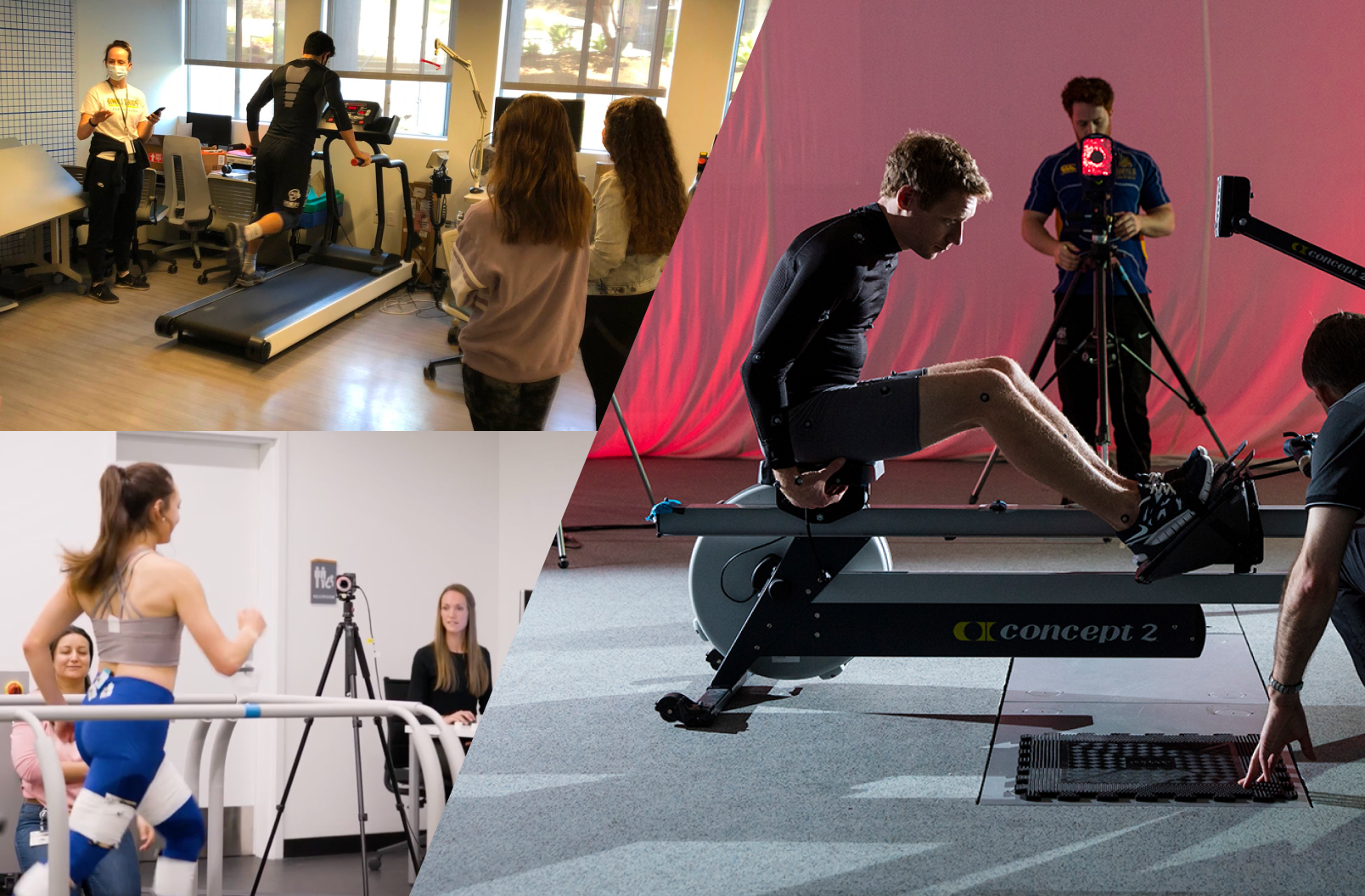
From biomechanics and rehabilitation to sports science and robotics, motion capture data enables researchers to determine how humans, animals, and autonomous systems—such as drones—move, interact with, and respond to their environments. By “converting” movement into precise data, researchers can gain insights and analyze patterns that would, in many cases, be impossible to detect through observation alone.
We have been fortunate to support researchers around the world by providing motion capture solutions that help drive cutting-edge movement-related discoveries with the potential to influence multiple fields and various applications.
In this blog, we highlight five of many biomechanics studies in which researchers used our technology to examine the characteristics of human movement to better understand the impact that aging and physical restrictions have on movement, kinematic manipulability in sport, and injury prevention.
A closer look at mocap in scientific studies
- How does age affect changes in leg muscle activation patterns and leg joint moments during prolonged walking?
According to Yujin Kwon, Hoon Kim, and Jason R Franz, the ways that age impacts neuromuscular control in reaction to walking-related fatigue are not well understood. Gaining this insight could help inform strategies to support independent mobility in older adults. This study investigated how age influences neuromuscular characteristics and net joint moments during a 30-minute walking trial in the context of walking-related fatigue.
Wireless surface electromyography (EMG) recorded the muscle activations of 12 dominant-leg muscles at 1000Hz. Synchronously, our 3D motion capture system—including 15 cameras—was used to track 36 retroreflective markers placed on the participants along with bilateral ground reaction force data, using an instrumented dual-belt treadmill.
The researchers’ collective findings reveal neuromuscular changes during prolonged walking that may result in older adults experiencing higher susceptibility to walking-related fatigue than younger adults. They indicate that understanding these differences between age groups could help in the development of fatigue monitoring and walking assistive devices to reduce walking-related fatigue and support independent mobility in older adults.
Link to full study.
- Bilateral muscle compensation occurs with a unilateral rotator cuff tear: A modeling study
As noted by Zoe M Moore, Joshua Pataky, and Meghan E Vidt, bimanual tasks are a part of daily activities but may become difficult to complete with a musculoskeletal disorder such as a rotator cuff tear (RCT).
This study aimed to expand a unilateral upper extremity musculoskeletal model to a bilateral model to look at differences in bilateral muscle compensation and changes in kinematics when performing a loaded bimanual task with a unilateral RCT.
A system—including 10 retroreflective markers and eight Kestrel cameras—was used during the kinematic verification process of the bilateral model. The markers were placed on the bony landmarks of a plastic, human-size skeleton, on the left side. The marker locations were post-processed and smoothed in Cortex, using a Butterworth filter, and these filtered unilateral marker locations were mirrored across the mid-sagittal plane to determine the corresponding locations on the opposite side of the skeleton. Both sides were used separately as the input for model simulations.
In the study’s conclusion, it was noted that identifying compensatory mechanisms associated with unilateral injury has the potential to reveal targets for customized rehabilitation, enabling the performance of daily functional and occupational tasks and supporting further research into the development and progression of musculoskeletal disorders such as RCT. However, it was acknowledged that further experimental validation is needed before these findings can be applied in clinical practice.
Link to full study.
- Comparison of kinematic manipulability in baseball hitting at different hitting points
Akio Morimoto, Takahiko Sato, and Akinori Nagano explained that in baseball, batters need to adapt their bat positions based on the pitch location. To do so, they must be able to displace the bat across a wide range of positions.
While some studies have investigated the kinematics and kinetics of hitting, the researchers stated that no study has examined the extent to which batters can displace bats. This study aimed to investigate the manipulability of bats when they hit a ball at different locations using kinematic manipulability indices.
The researchers used our motion capture technology—including 16 Raptor-E cameras—to track the movement of 20 baseball field players hitting stationary balls. Each participant was modeled as a system of 10 connected rigid bodies with 21 degrees of freedom. From this, kinematic manipulability indices were derived using measured joint angles and segment lengths. The raw marker data were filtered using a fourth-order Butterworth low-pass filter.
This study’s findings might have practical implications for developing targeted batting methods. Batters may also benefit from examining movements associated with higher kinematic manipulability at specific hitting points, which has the potential to improve their batting performance.
Link to full study.
- An articulated ankle foot orthosis with plantarflexion resistance decreased soleus and tibialis anterior muscle activity, and plantarflexion moment of the paretic lower limb of persons with stroke
As Oluwaseye P Odanye, Emily A Steffensen, Aaron D Likens, Elisa S Arch, and Brian A Knarr noted, ankle foot orthoses (AFOs), braces that support the ankles, can help persons with stroke walk, particularly if they have dorsiflexor weakness. In this study, the researchers fabricated a custom articulated AFO incorporating mechanical joints to assess how plantarflexor resistance affects lower-extremity muscle activation in individuals with stroke.
They recruited five persons with stroke, three of whom could walk independently with or without a walking aid, and two with a clinically prescribed AFO. The articulated AFO used in this investigation was personalized for each participant. Once they had been fitted, 47 retroreflective markers were placed on participants’ anatomical landmarks and shoes. Five EMG sensors were used to monitor muscle activity, with the EMG system synchronized with our 20-camera motion capture system and eight inground force plates.
The study showed the effects that plantarflexor resistance in an articulated AFO had on mean muscle activity and the gait of the paretic lower limb in persons with stroke. The researchers concluded that, beyond the findings of this single-session study, longitudinal research is needed to determine the long-term effects of AFO plantarflexion resistance on muscle activity in stroke survivors and to better understand the impact on muscle performance and physiology.
Link to full study.
- The effects of hip abductor fatigue on gait instability in older adults
Fatigue is a key factor that influences muscle force responsiveness and, therefore, the capacity to respond to balance challenges, as conveyed by Andrew D Shelton, Vicki S Mercer, Katherine R Saul, Kinh Truong, and Jason R Franz. They additionally indicated that mediolateral stability is vital for older adults to move safely in their day-to-day environments. This function relies heavily on active control, with the hip abductors playing a key role in regulating lateral foot placement.
In this study, the researchers aimed to characterize the effects of hip abductor fatigue on gait instability among a group of 15 older adults. The participants wore wireless EMG-recording electrodes, with data scaled on a channel-by-channel basis within Cortex. They were also fitted with retroreflective markers and an additional 14 tracking markers. The retroreflective markers were monitored using our 15-camera motion capture system, and all walking tasks were performed on dual-belt, instrumented treadmill, while all fatiguing tasks took place on the laboratory floor.
This study was the first to demonstrate a mechanistic connection between hip abductor fatigue and reduced force responsiveness during efforts to maintain stability during recovery from unexpected lateral walking balance disturbance. The findings indicated the importance of targeted prevention strategies that reduce hip abductor muscle fatigability or that improve hip abductor fatigue resistance to support older adults’ ability to react to unexpected environmental perturbations which could lead to falls.
Link to full study.
Emerging research opportunities
Shane Maher, our Customer Support Engineer, regularly works with customers including many researchers to help them get the most out of our motion capture and integrated systems. With a keen interest in research himself, he is well positioned to support research teams and guide them in achieving their goals.
Having worked with many academic teams, Shane has seen the opportunities our technology creates for new discoveries firsthand. We asked him to share some of his thoughts.
“Our goal at Motion Analysis Corporation is to provide professionals in the biomechanics industry the tools to help change science and how we understand our bodies to work in motion,” says Shane. “From our motion capture system to Cortex software, along with our associated third-party partners, we want to give researchers the tools needed to better understand principles of how motion is measured and analyzed.
“Across multiple industries, we at Motion Analysis Corporation support all of our end users in the journey to improve movement-based sciences as we know it. As technology improves, we look to improve our motion capture technology for end users to continue shaping what we understand within movement.”
How we support various studies
We work with and support teams across disciplines to help them gain a deeper understanding into human, and other, movement and its many complexities by using our motion capture technology. The insights we glean from these collaborations also inform our design and problem-solving, enabling us to provide tools that are intuitive, reliable, and suited to the needs of researchers. We work with users to understand their challenges, ensuring our motion capture and integrated systems make it easier to explore new areas of research and uncover meaningful findings.
Advance your research
To learn more about how Motion Analysis can help you, your faculty or your organization make new discoveries in motion capture, book a demo today.
Disclaimer
The study synopses in this blog provide a high-level overview of the cited research papers, reworded under the Creative Commons Attribution 4.0 International License. While care has been taken to convey information accurately, these summaries cannot capture the full scope, context, or detail of the original work, and inadvertent oversights may occur. Please consult the original publications for complete information or to cite any text.
References
- Kwon, Y., Kim, H., & Franz, J. R. (2025). How does age affect changes in leg muscle activation patterns and leg joint moments during prolonged walking?. European journal of applied physiology, 125(12), 3651–3662. https://doi.org/10.1007/s00421-025-05867-2
- Moore, Z. M., Pataky, J., & Vidt, M. E. (2025). Bilateral muscle compensation occurs with a unilateral rotator cuff tear: A modeling study. PloS one, 20(9), e0333103. https://doi.org/10.1371/journal.pone.0333103
- Morimoto, A., Sato, T., & Nagano, A. (2025). Comparison of kinematic manipulability in baseball hitting at different hitting points. Scientific reports, 15(1), 41717. https://doi.org/10.1038/s41598-025-25663-4
- Odanye, O. P., Steffensen, E. A., Likens, A. D., Arch, E. S., & Knarr, B. A. (2025). An articulated ankle foot orthosis with plantarflexion resistance decreased soleus and tibialis anterior muscle activity, and plantarflexion moment of the paretic lower limb of persons with stroke. Journal of electromyography and kinesiology : official journal of the International Society of Electrophysiological Kinesiology, 84, 103041. https://doi.org/10.1016/j.jelekin.2025.103041
Shelton, A. D., Mercer, V. S., Saul, K. R., Truong, K., & Franz, J. R. (2025). The effects of hip abductor fatigue on gait instability in older adults. Journal of neurophysiology, 134(4), 1329–1339. https://doi.org/10.1152/jn.00465.2024






 - Kestrel Plus Cameras - Thunderbird Cameras - Active Cameras - Markerless Cameras